
Following Chris Williamson’s resignation from the Workers Party of Britain in response to George Galloway’s decision to stand against Zack Polanski and the Greens in the Holborn and St. Pancras by-election, Jack Howley explores the battle for the post-Corbyn Left and the line between anti-imperialist independence and a return to the established order.
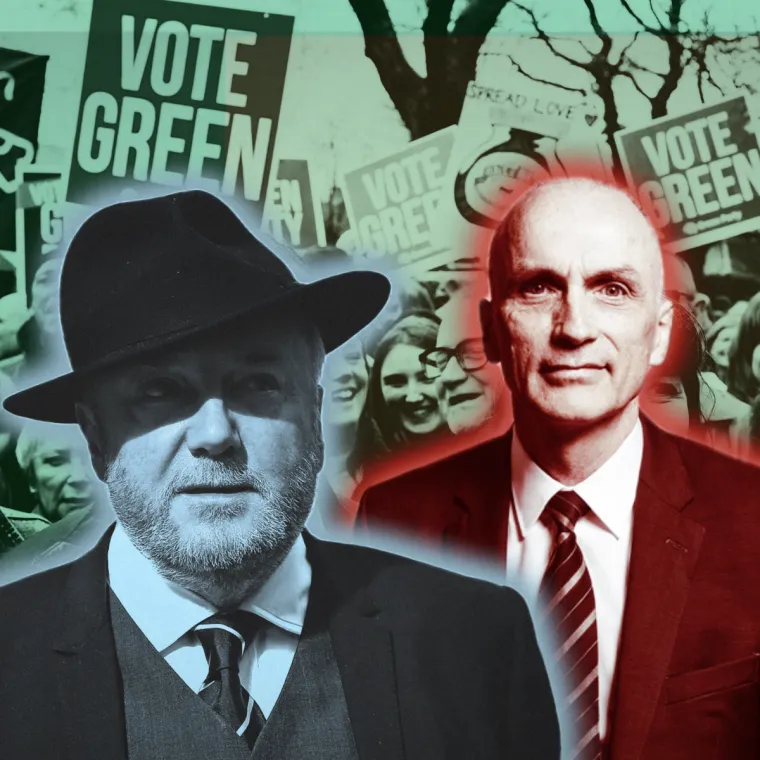
Chris Williamson’s resignation from the Workers Party of Britain, following its decision to stand Galloway against Polanski, appears to turn on precisely the question of “splitting the Left.” Earlier this year, Williamson defended the Workers Party’s withdrawal from a by-election on the same grounds. Despite having won more than 10 per cent in 2024, the party stood aside; and Hannah Spencer went on to defeat Reform’s Matthew Goodwin with 40.7 per cent of the vote.
Now, in Starmer’s vacant seat, there will be no such accommodation. George Galloway and Zack Polanski are both standing.
So the accusation is made: Why split the Left?
But contained inside that question is the entire argument.
What splitting the Left assumes
A vote can only be “split” if what is being divided belonged together in the first place. Before there can be a divided Left, there has to be some political whole called the Left whose constituent parts are sufficiently aligned so that electoral competition between them amounts to self-sabotage.
And that is precisely what is in dispute. Britain’s international alignment with imperialism is the entire political structure our socialist movement must confront before it accepts bribes to sit still. The Workers Party and the Greens may overlap on distribution, but the real question is simpler: does an organisation challenge that structure of power, or remain subject to it?
The Greens remain firmly situated within the institutional world of the EU, NATO and the wider Western alliance system. The Workers Party defines itself through rejection of that system and through solidarity with all peoples resisting it. More plainly, one camp materially sustains Israel and the wider military architecture behind its regional wars; the other camp backs governments that Israel and its allies seek to weaken or overthrow.
Lenin confronted a version of this problem during the First World War. Parties that had coexisted beneath the banner of social democracy were forced by war to reveal commitments previously concealed. His accusation of social-chauvinism was directed at socialists who retained socialist language while adapting their political practice to the interests of the imperial class: socialists in words, chauvinists in deeds. We could say then, socialists in words, Zionists in deeds.
Everything else is secondary unless it alters that relation. The familiar left-right spectrum, and especially its tendency to outpace and browbeat the actual development of common consciousness, pushing ever further beyond prevailing social sensibilities and marginalising genuinely progressive politics, are expressions of that deeper subordination.
What follows is a rainbow array of imperialist-sponsored cultural radicalism imposed from above, through which the Western Left is progressively estranged from the world’s anti-imperialist forces, forces it might otherwise recognise as allies were they not perpetually dismissed as too “backward” to qualify.
Any non-dogmatic socialist organisation in Britain will make use of elections, reforms, institutions and partial demands. The more important question is what those reforms are politically for. Do they build forces increasingly independent of the existing political order, rearranging loyalties and creating new capacities for power?
The Green and Workers Party manifestos alone cannot answer that question. Political dependence is harder to disguise, which brings us to the real constituency at stake, besides the Holborn and St Pancras seat.
The politically homeless bloc
The defeat of Corbynism produced a substantial politically homeless bloc. Corbynism 1.0 mobilised enormous political energy, but failed to build an organisation capable of surviving independently of Labour. The Workers Party quickly revealed the existence of a constituency beyond Labour, winning hundreds of thousands of votes despite contesting only a fraction of available seats. Five years of Corbynite hesitation later, Your Party triggered another eruption of enthusiasm, with almost a million signatures registering interest.
The recurring fact is that a significant bloc has moved beyond Labour without yet finding a durable political home. Whatever one thinks of Zarah Sultana, she gave that break a possible political content through her faction of Your Party: socialist, anti-imperialist, anti-Zionist and outside NATO, a distinction she consistently made from the Greens.
With Corbyn’s faction now dominant, Sultana becomes the convenient culprit for Your Party’s increasingly farcical paralysis: its failure to act, its reluctance to contest elections, and the resulting drift of precisely that constituency towards the Greens. The effect is a pincer move: the Left that tried to break with Corbynist inertia of 2019 is, by 2026, marginalised on one side, while well-meaning socialists are absorbed on the other into the pro-NATO Greens.
Williamson's return ticket
It is this apparent “insurgency” within the Greens that gives Williamson his ideological return ticket.
The return ticket is the preserved possibility of political re-entry into the establishment after a substantial movement away. Former comrades like Williamson may have travelled far, but the political world they leave remains the place to which judgement ultimately returns when the alternative becomes too difficult.
Meanwhile, the anti-imperialists must continually qualify for solidarity. Their rhetoric is inspected. Their personalities are inspected. Their alliances, mistakes, aesthetics, manners and moral character are inspected from the warm embrace of the status quo alignment with imperialism.
It’s as if they are saying: “You need to convince me personally.”
But the demand is structurally unequal, and always exists like a recurring threat:
“Don’t make me do it. Do not make solidarity socially expensive, or I will return.”
The formulation gives the game away. One can only threaten to return somewhere that remains politically available. What appears subjectively as the withdrawal of support from an anti-imperialist organisation is, structurally, a return to the very institutions and political categories from which that organisation constituted a break.
This is why the by-election reaches far beyond the immediate contest and cuts straight through the unresolved fault line of the post-Corbyn Left. It brings into confrontation two leaders whose political orientations emerge from opposing international camps: one situated within the institutions of the imperialist Western alliance, the other defined by absolute opposition to those institutions.
Polanski’s rise has coincided with an attempt to make the Greens the institutional home of those mobilised by Corbynism, absorbing that energy and rendering it politically ineffective against imperialism.
The meta-People's Vote tendency
And this is where the history starts to bite.
The contest is taking place in Keir Starmer’s former seat, the man who drove Labour towards the second-referendum position that fractured Corbyn’s electoral coalition with the Brexit-voting Labour heartlands. Polanski was himself among those who used the issues of the EU and ‘antisemitism’ to bring down Corbyn before his rebrand from a Lib Dem into a Green with the help of Novara Media, Owen Jones, PoliticsJOE et al.
Call it the meta-People’s Vote tendency.
The original People’s Vote sought to reverse one rupture, Brexit, through cross-party mobilisation around European integration.
The “meta” version names a broader political function. When political energy breaks its banks and begins to flow beyond the established imperial order, it is blocked from running its own course towards independent organisation. It is dammed, diverted and channelled into a new organisational riverbed of the same quality, one whose appearance may change while its political horizon remains safely contained within the institutions of that same order.
The socialist subject returns to the same political totality through a different organisation, for the most part without common intent. And so the circle can close by itself: a Farage-Polanski contest could even reproduce Brexit versus Rejoin in a new costume, repeating the historical tragedy of Corbynism as the farce of Polanskism.
Here “unity” becomes the vocabulary through which rupture can be postponed indefinitely, all in the name of bribing the socialist movement with ‘redistribution’ and military Keynesianism.
At what point do we simply call this Fascism? The Ukrainian regime that Polanski supports does not hide its neo-Nazism, and Hitler, after all, was a vegetarian environmentalist who wanted to see Russia destroyed. The Greens have also still not decided whether they think Zionism is racism, perhaps forever pending with a statement on the plume of methane bubbling from the Nord Stream attack.
This all leaves Sultana in an awkward position. She has already been pushed towards the margins, and without an independent organisation behind her, her own parliamentary position is precarious. That is what makes Holborn and St Pancras such a test. Galloway is on the ballot for the Workers Party, representing the independent socialist, anti-imperialist force she fought for. If it was meant sincerely, I’m sure the Workers Party would welcome her, as this by-election provides concretely what that distinction from Labour and the Greens actually means.
It means there is no return ticket.
The price Galloway pays
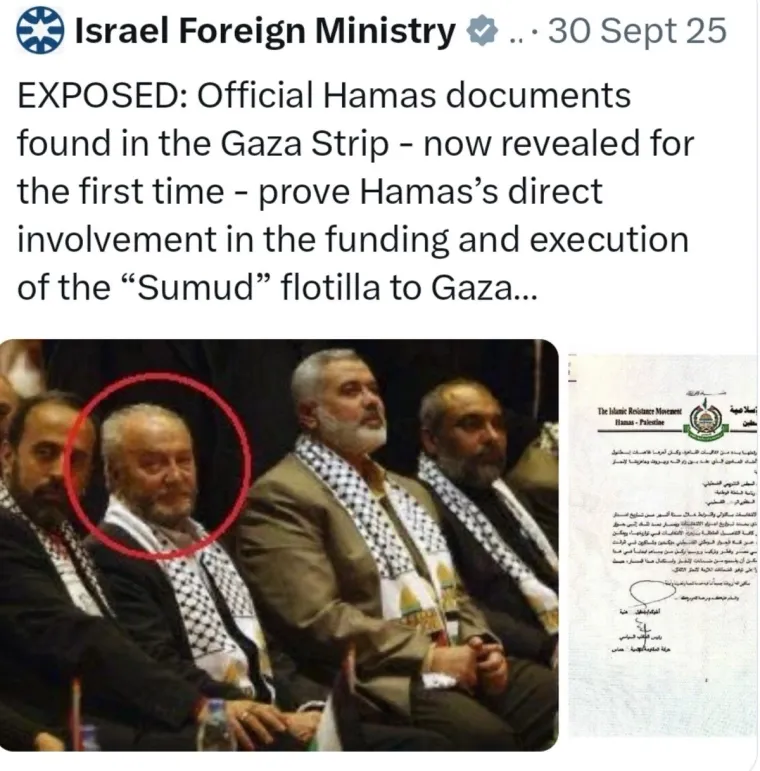
Ask Galloway what this looks like. Your face is circulated by the Israeli Foreign Ministry inside a target circle and associated with Hamas, a blank cheque for your murder. Your bank account is closed without explanation after thirty-nine years. You return to your own country with your spouse and are detained under counter-terror powers, your devices seized.
There is no guarantee of safe passage back. The old political world sneers and scoffs at your repression under the iron fist of the imperial regime, and you may have to campaign without your physical presence there.
There is a savage historical irony for Chris Williamson. He knows perfectly well what happened the last time he inhabited the political world of social-Zionism. Under Corbyn’s Labour he was suspended amid the antisemitism scam, yet now he wishes to support the same Polanski who invoked his Jewish identity to help make him an exile in the first place.
Let us wish him well on his return, but let’s also be clear: there is no split.
The contradiction has simply been forced into the open because Galloway has done what Corbyn and Sultana did not: built an independent socialist organisation prepared to stand an explicitly anti-imperialist and anti-Zionist candidate, and anybody who calls themselves a socialist should and will support Galloway’s Workers Party in this election.
Jack Howley is a writer, producer, and founder of Future Angles—a YouTube channel for Marxist audiobooks, articles, and documentaries; Ground-shift Press, an independent publication for writing; and Koba’s Riddle Records, an independent record label and music production platform.