
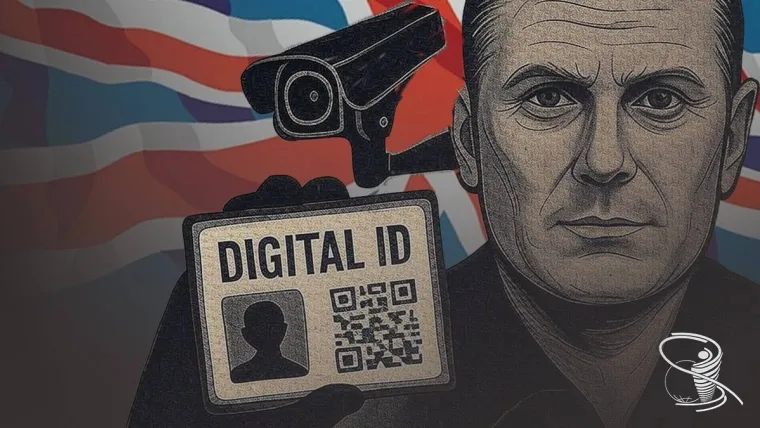
The government’s proposal to introduce a new, national, digital identification scheme poses a massive threat to civil liberties in the United Kingdom—the next step towards totalitarianism in this country.
In recent years, we have seen the state continue to crack down on and suppress freedom of speech by arresting people protesting the genocide in Palestine. This is the next step forward for this government’s authoritarian agenda.
Digital IDs will be issued to UK citizens and permanent residents, and will be required to legally work in the UK. The system is said to store people’s names, date of birth, nationality, residency status, picture, and will operate on a smartphone-based application.
While the government claims that participation will be voluntary for certain services, this is an open lie if it becomes mandatory for work or for accessing benefits, as this will effectively force people to comply. In Keir Starmer’s own words: “You will not be able to work in the UK if you do not have a digital ID”.
Digital ID also poses a massive risk as it can be used as blackmail by the government. Anyone who doesn’t comply to having their data stored won’t be able to work or access welfare or other government services.
The system could potentially be expanded over time in ways that go far beyond its original purpose, gradually becoming mandatory for healthcare, banking, travel, and even voting rights. Once the infrastructure exists, it will be used to monitor and regulate ever more aspects of our daily life, shifting the balance of power decisively towards a shadowy state apparatus.
By tying employment and welfare access to digital ID compliance, the system effectively penalises anyone who cannot or chooses not to participate. This creates barriers to entry for jobs, limits economic mobility, and places undue strain on vulnerable people. Those who rely on informal employment or temporary work will be disproportionately affected, potentially pushing them into poverty or dependence on the state while being forced into compliance with a system they do not trust.
And public trust in the government’s handling of this initiative is already low, with polls showing that most people are strongly opposed. The announcement of this scheme has therefore provoked huge anger with a recent petition being signed by almost 3 million people, and several protests across the country in cities including London, Birmingham, and Manchester.
Amnesty International has issued statements highlighting that the digital ID system could place personal information at serious risk. They warn that the potential for mass data breaches, misuse of information, and government overreach is far higher than any purported benefits. Similarly, the campaign group Big Brother Watch has labelled the plan “Checkpoint Britain,” warning that it could create a society in which the state constantly monitors the movements and activities of ordinary citizens.
Whether accessing services, entering public spaces, or conducting transactions, these could all leave a permanent digital footprint which the government can use to track and monitor people against their will.
The British state is not going to listen to the will of ordinary British people as we have already seen over Palestine, welfare cuts, and many other issues. It therefore remains our job to ensure that the government is stopped before it introduces these dictatorial policies. Remember, no one voted for a digital ID scheme and the government has no clear mandate to implement one.
In addition to this, there are still millions of UK residents who do not have access to smartphones, reliable Internet, or with the digital literacy required to navigate such systems. The disabled, the elderly, and those in rural areas could find themselves unable to participate fully in society if digital ID becomes essential for work, healthcare, or public services. This risks creating a new class of second-tier citizens, excluded from fundamental social and economic activities simply because they cannot comply with a state-mandated digital system.
Beyond immediate concerns over exclusion and coercion, the proposed scheme poses serious threats to privacy and personal autonomy. By consolidating so much sensitive information into a single digital system, the government effectively creates a centralised database of our lives. This not only makes the information vulnerable to cyberattacks, but also opens the door to potential misuse by the authorities. Even with assurances over encryption and security protocols, history shows that large-scale government databases are massive targets for hackers and are not immune to leaks, which could expose millions of people to identity theft, financial fraud, or worse.