
In this piece, Iranian communist Abtin Khamoshi dives into the internal politics of the Islamic Republic of Iran. Iran finds itself at the vanguard of the anti-imperialist and revolutionary movement, but two main factions vie for power: the principalist “revolutionary” camp, and the reformist “collaborationist” camp. Khamoshi argues that the principalists must win out if Iran is to navigate the threat posed by empire.
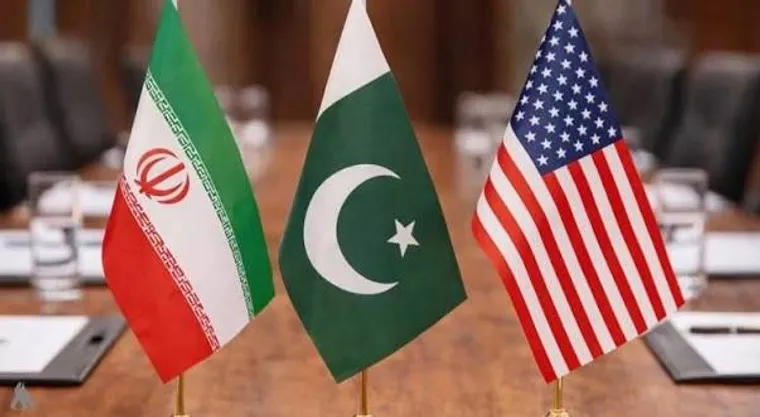
Days after I was asked to write this, the “Memorandum of Understanding” signed between the US and Iran had already collapsed under the weight of its own contradictions. It was criticized from the start as a pipe dream and few believed it was a real end to the war. At best, it was just a way to improve Iran’s position in the region and relieve a beleaguered Lebanon. But at worst, it was a return to the Joint Comprehensive Plan of Action (JCPOA) and a betrayal of Iran and the resistance axis during a time of genocide and war.
Foad Izadi, the prominent Iranian intellectual called it early and offered one of the best critical assessments of the arrangement—the MoU is destined to fail for a number of reasons; not in the least the fact that Iran has not done sufficient damage to the enemy to exact concessions. Imperialism vis-a-vis Iran is not an issue of policy. The empire has a problem with Iran as an entity unto itself which they feel must be destroyed.
Within Iran, a long-standing division exists on how to deal with this issue. On one side is the reformist (or revisionist) camp, which argues that Iran can ensure steady growth, prosperity and peace with all and sundry by simply changing its anti-imperialist posturing and by changing certain policies both domestic and foreign. In doing so, Iran will then simply become like any other country. We can be China, Singapore or even Germany. However ridiculous this might be, it is a commonly held belief in middle-class circles, often espoused in Iranian universities and other such environments.
The opposing camp, the Khomeinist prinicipalist (or revolutionary) camp, sees anti-imperialism and resistance as the only path for our continued survival. For decades, the reformist camp has dominated both at the ballot box and in intellectual spaces. To understand Iran, one must acknowledge that the intellectual sphere is not much different than that of socially liberal societies elsewhere. We are all living in the age of globalism and Iran is no different.
One of the results of this stale paradigm is that we have seen more reformist governments coming forth as opposed to alternatives. Iran has only had two real periods in which the reformist camp has not been in power. Both ended abruptly and violently—the ousting of Ahmadinejad through the farcical “Green Revolution” and the mysterious death of president Ibrahim Raisi in 2023, with his helicopter allegedly crashing in the mountains close to Azerbaijan.
The presidency ended up back in the hands of the reformists through an election process that left much to be desired. Mohammed Qalibaf, now known to many through the MoU process, ended up splitting the vote of the principalist candidate Saeed Jalili, causing him to lose the first round of the election. This led to the Pezeshkian victory and the current moment. Jalili obtained the majority of the principalist vote, Qalibaf stayed in the running even though he had no hopes of matching either Pezeshkian or Jalili, and Pezeshkian emerged victorious. The question to be asked then is why the principalist camp was unable to unite behind one candidate.
To answer this question we must first understand what Iran is as both a revolutionary state and a post-colonial society. The revolution of 1979 was the culmination of decades if not centuries of class struggle against foreign rule, incompetence and wretched poverty. However, the events of 1979 didn’t magically end this dynamic. There are no silver bullets in revolutionary struggles. Iran is locked in an imperialist paradigm spanning centuries and ever evolving. The comprador class adapted to the new conditions and re-emerged within the revolutionary state. Some of the pillars of the revolutionary state are people who are never named in official media or respectable discourse, but are nonetheless known to large swathes of the public. They control the mechanisms of the revolutionary economy. They offer the means to bypass sanctions.
They also have a bi-partisan political body. They aren’t simply “the liberal reformist camp”. They exist within both camps simultaneously. If you are doing politics in Iran, you can’t escape their power. Iran since the days of Ahmadinejad has become increasingly more oligarchical, however contradictory this may seem at a first glance. Ahmadinejad emerged as a breath of fresh air and directly challenged the orthodoxy of the system. He was the candidate of the poor, but the compradors quickly reorganized and infiltrated his government. Ahmadinejad the revolutionary became the agent of the largest privatization project in Iranian history. In the end, he was marginalized and the rest is history.
So, why does Iran strike out in massive missile attacks at multiple countries at one moment, and then at the next moment find its officials in luxury hotels in Switzerland deliberating with imperialist politicians? This dynamic is seldom explained in the myriad of punditries and articles written about our country. Let this be a taster for what is to come, for there is much to cover in regards to Iran and West Asia for anti-imperialists outside the region.
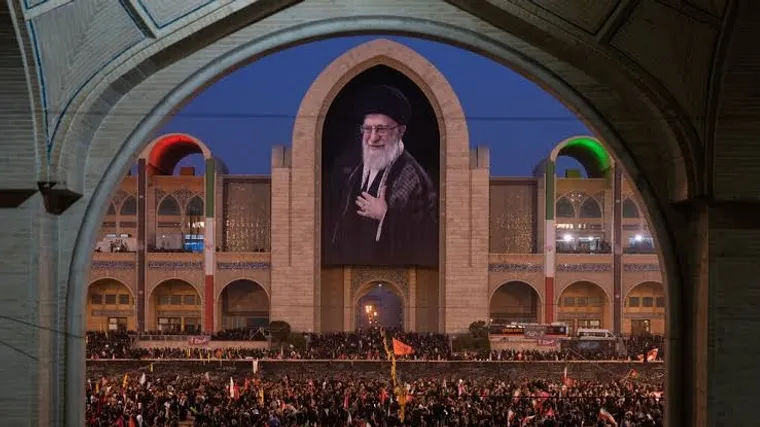
As the MoU has collapsed and the martyred leader of the republic has been buried—following an unprecedented ceremony with millions of participants in multiple countries—the hot war has resumed. The rhetoric from Iran has sharpened, the revisionists have again been sidelined after another failed venture with the West, and the people of Iran are demanding retribution. Those guilty of the many crimes committed following Al-Aqsa Flood must be punished. The Pezeshkian government has tried to sideline the popular voice, going so far as to ask people to vacate the streets after the burial of Ali Khamenei.
But the people will not go willingly. They have remained steadfast in their support of the state and the war, showing their support for days on end in mass demonstrations in the streets. Officials face an angry population that has even gone so far as to call for the death of Arraqchi in the streets. This might be the end of the liberal paradigm, or its beginning.
The new line that is emerging in the aftermath of the MoU is one of intense attacks on multiple fronts from the Islamic Republic, even involving ground operations in Iraqi Kurdistan with airborne troops supported by drones and missile attacks. The primary goal is to maintain control over the strait of Hormuz, and simultaneously weaken the enemies’ ability to harm Iran further.
Much more is left to be said, but suffice it to say that peace is no longer on the horizon.