
Dr. Dermot Hudson, Chairman of the Korean Friendship Association (UK) uses the Month of Solidarity with the Korean People against US Imperialism to remember the sacrifices during the Korean War and to show solidarity with People’s Korea.
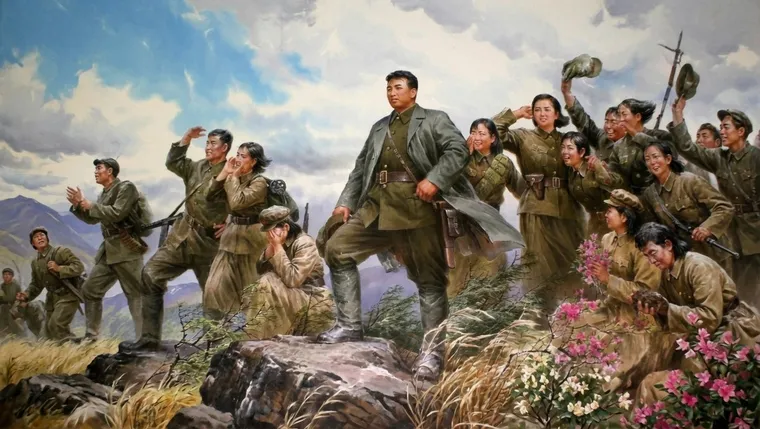
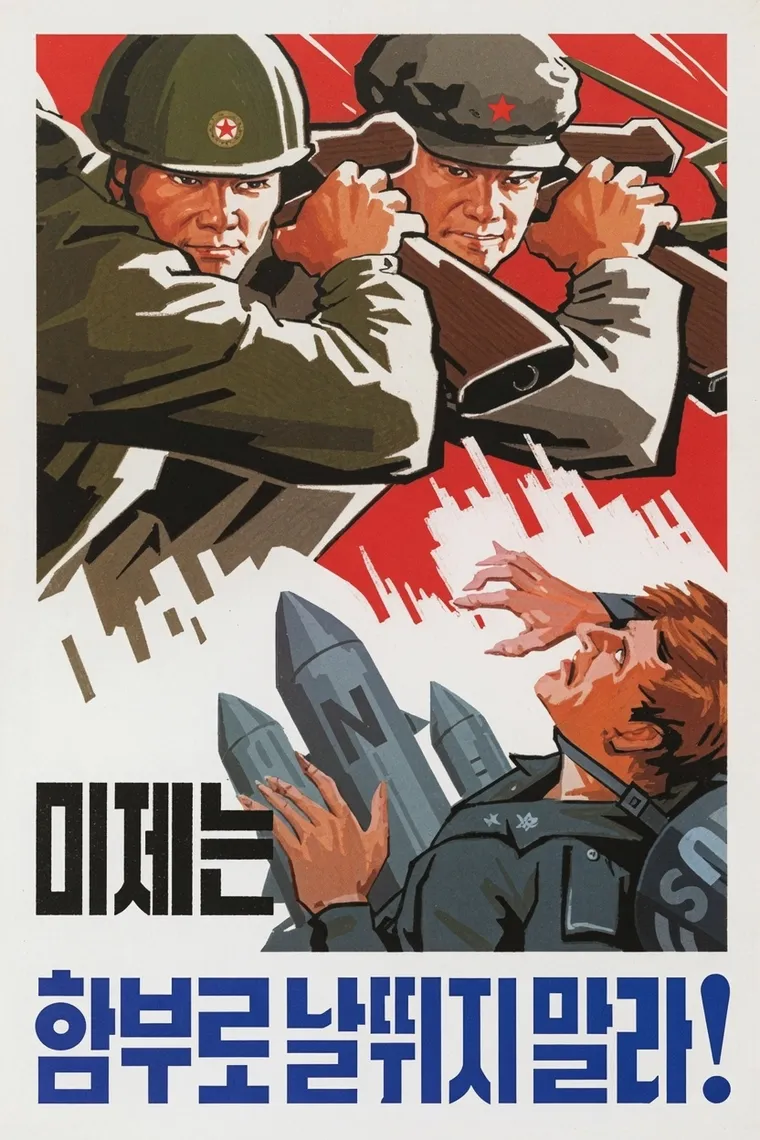
June 25 to July 27 is the Month of Solidarity with the Korean People against US Imperialism. This is a good occasion for communists, socialists and anti-imperialists to renew their solidarity with People’s Korea.
Back in 1966, the Organisation of Solidarity of the Peoples of Africa, Asia, and Latin America (OSPAAAL)—whose legacy is today carried on by the Tricontinental: Institute for Social Research—declared that June 25, when the Korean War (known as the Great Victorious Fatherland War in the Democratic People’s Republic of Korea (DPRK)) started, and July 27, when the armistice was concluded, should be the “Month of Solidarity with the Korean People against US Imperialism.” In the DPRK itself, June 25 is the Day of Struggle against US Imperialism when mass rallies against the US take place.
The Month of Solidarity with the Korean People is marked in different countries by pickets, protests, meetings and seminars. Why is this month so crucial and important? To understand why, we need to look at what happened in Korea over 70 years ago.
How the Korean War really began
To this day, Western media and academia lie about about the Korean War, blaming the DPRK for starting it and falsely claiming that the DPRK “invaded south Korea” on the 25th of June 1950. In fact, on the morning of the 25th of June, the south Korean puppet army attacked the DPRK and intruded 1-2 kilometres into DPRK territory. This was according to a plan drawn up by the US on January 26, 1950 when the American state concluded the US-south Korea Mutual Defence Treaty. On the 14th of April, 1950, a then secret directive of the US National Security Council (directive NSC 68) authorised the start of the Korean War.
John Foster Dulles, the architect of the US rollback policy, actually visited south Korea in June 1950, just one week before the war started. It is impossible for this to have been a coincidence. Dulles even inspected the frontline along the 38th parallel and there is a picture of him inspecting a map.
Dulles said to the south Korean puppet army, “No strong enemy whatever would stand against you. But I hope you will strive ever harder because the day is not so far off when you’ll have to display your great might for your own sake.“
Addressing the south Korean puppet “national assembly” he said: “You are not alone. You will never be alone so long as you continue to play worthily your part in the great design for the freedom of human beings.” This was a coded message to the south Korean puppets to start the war.
After visiting south Korea, Dulles stopped off in Tokyo and met with General Omar Bradley and General Douglas MacArthur as well as US Defence Secretary Louis A. Johnson. Again, this meeting cannot have been coincidental. On the 22nd of June, Dulles stated, somewhat cryptically and enigmatically, “The United States will soon take some positive action.” It was evident that the meeting was to finalise the provocation of the Korean War.
US massacres and the Sinchon Museum
During the Korean War or “Fatherland Liberation War,” which lasted 3 years from June 1950 to July 1953, the US imperialists killed at least 1.2 million people in the DPRK. 35,383 people were murdered by the US at Sinchon-ri and 1,050 people at Susan-ri (one third of the population of the area), just to give a few examples. I visited the Sinchon Museum (now the Sinchon Class Education Centre)—constructed at the site of the massacre by US imperialist troops and their collaborators, including former landlords, capitalists, and money lenders—in 2002, 2008, 2013, 2015 and 2017. (Sinchon County is about 2 hours by road from Pyongyang.) In 2013, I took part in an international anti-US rally at Sinchon which was attended by former U.S. Attorney General Ramsey Clark.
The museum was rebuilt and expanded in July 2015. Respected Marshal Kim Jong Un visited Sinchon in November 2014 and declared that “The massacres committed by the U.S. imperialist aggressors in Sinchon evidently showed that they are cannibals and homicides seeking pleasure in slaughter.”
With regard to the task of rebuilding and expanding the Sinchon Museum he pointed out that “Illusion about the enemy just means death and any slightest illusion about the enemy may lead to the renunciation of the revolution and eventually spoil it.”
Visiting the museum in October 2015 and April 2017 (now much bigger than the old one) I saw the grim and truly stomach-turning evidence of American imperialist crimes in Korea. In truth, the Americans and their puppets even outdid the Nazis in their savagery in terms of how many people they killed in such a short space of time and in such a confined area. In doing so, the US imperialists also used all kinds of barbaric and bestial methods of killing, including biological weapons (the weapons of the devil) and chemical weapons. The US also carpet-bombed the DPRK destroying many buildings, including schools and hospitals as well as factories. (Only 3 buildings were left standing in Pyongyang.) It is no wonder that the war was described by the Australian journalist Wilfrid Burchett as “this monstrous war.” The Australian authorities took away Burchett’s passport for his honest reporting of the war and he had to live in exile in Bulgaria.
Britain's shameful part in the war
The British role in the Fatherland Liberation War was truly shameful. The UK was one of 15 satellite states of the US that sent troops to fight against the Korean people. The other countries that form the roll of dishonour and disgrace are: Luxemburg, the Netherlands, Belgium, Greece, France, Colombia, Turkey, New Zealand, Canada, Australia, South Africa, Ethiopia, Thailand and the Philippines. (Japan participated in the Korean War secretly.) It is significant that the UK found itself fighting not only on the same side as US imperialism, but as Apartheid South Africa, Colombian death squads, fascist Greece, Haile Selassie’s Ethiopia, and other reactionary regimes against an independent, progressive, democratic and anti-imperialist government. Thus, the Korean War was a totally reactionary one that held back the liberation struggle of the Korean people and the reunification of Korea.
The government of Clement Attlee, which is praised in some quarters, was responsible for surrendering Britain’s independence by taking the UK into NATO and purging communists from the civil service. In addition, it was a willing accomplice in the aggression against the Korean people. Attlee sent young men to fight in Korea against the Korean People’s Army commanded by the great leader Marshal KIM IL SUNG. British troops were essentially turned into cannon fodder and mercenaries for US imperialism. Attlee (Labour) and Churchill (Conservative) sold the lives of young British men for a measly handful of US dollars. In fact, in order to pay for the cost of sending the troops to Korea, prescription charges were increased.
Among the British forces sent to the Korean front was the Royal Ulster Rifles which had suppressed the Irish people and committed many atrocities during the Troubles in northern Ireland. The British Army held back the reunification of Korea in the 1950s and also held back the reunification of Ireland.
Those in Britain who opposed it
In Britain, there was some opposition to British participation in the US war against the DPRK. The (now defunct) Communist Party of Great Britain, Young Communist League and Daily Worker newspaper opposed the war and organised demonstrations and rallies against it.
Daily Worker journalist Alan Winnington reported from the DPRK and exposed the atrocities committed by the US in Korea. Winnington was threatened with being executed for treason by the British government and had his passport taken away, leaving him in exile in China and East Germany; and a disillusioned British conscript soldier Julian Tunstall wrote the book I Fought in Korea to expose the atrocities.
Labour MPs Stephen Owen Davies, Emrys Hughes and Tom Driberg also opposed the war, however the so-called “socialist” Michael Foot actually supported the US belligerents.
Another Labour Party member, Monica Felton, head of the Stevenage Development Corporation, went on a peace delegation to Korea and exposed the US atrocities in Korea upon her return. She was subsequently sacked from her job.
The war America lost
The US imperialists like to refer to the Korean War as the “unknown war”; this is simply because it was a war that they lost. On July 27, 1953 the US signed the armistice with the DPRK causing the US commander General Mark Clark to lament that “I gained the unenviable distinction of being the first United States Army Commander in history to sign an armistice without a victory.”
A right-wing US military historian Bevin Alexander, who was himself a US officer in the war, in his book Korea: The First War We Lost (1986) wrote that “Great efforts to conquer North Korea ended in failure.”
Former Daily Telegraph editor Max Hastings wrote that “Many American career officers were dismayed by the precedent Korea established: the United States had failed to fight a war to a victorious conclusion.”
During the Month of Solidarity with the Korean People, we should not only recall and denounce the barbaric crimes against the Korean people by US and world imperialism but also protest against the hostile policies of the US towards the DPRK which continue to this very day in the form of military exercises (which have on several occasions included British forces!), ongoing sanctions and the presence of over 30,000 US troops in south Korea.
US out of Korea!