
In the second of two pieces Stephen Nuttall reviews the prospects for Welsh independence in the context of vested and entrenched political power in the English imperial core.

Given the history that we have so far explored, I would argue that Wales, like Ireland, was colonised by the English state’s elite imperial process in a way that Scotland wasn’t. And despite growing support for the present day YesCymru campaign, many Welsh nationalists still believe that as Wales was the first imperial acquisition of Greater England, i.e. the English military-political entity established by the Norman hegemony (not by Alfred the Great), it will consequently be the last part of the empire to be emancipated. In my opinion, such envisaged national and cultural freedom could only be realised in the wake of the overthrow of the UK’s socio-economic system. Practically speaking, therefore, this would mean that the goal of Welsh emancipation is necessarily and inextricably linked to class struggle. Britain is an island—a geographical landmass—made up of four historic nations: Alba (Scotland), Cymru (Wales), England, and Kernow (Cornwall). By contrast, the United Kingdom of Great Britain and Northern Ireland (formerly Ireland) is a contrived political entity entirely set-up for the purpose of imperialist conquest, rapacious plunder and super-exploitation. From a communist perspective it has no merit whatsoever and must be completely abolished in order for working class-led popular forces to usher in a genuine commonwealth of people’s states. A family of nations based upon the interdependent foundational principles of liberty, equality and fraternity. Like the once and future USSR, a federal union of socialist council republics.
Scotland as England's junior partner
Be that as it may, in order to gain a better understanding of present-day Welsh independence prospects, an analysis of basic background information relating to Scotland—often viewed as England’s junior partner—may be beneficial.
As previously noted, between the late 13th and late 16th centuries, Scotland successfully defended its sovereignty from English aggression and territorial expansion. Later, however, with the 1707 Acts of Union, the Scottish bourgeoisie voluntarily led the country into the new Kingdom of Great Britain following the failure of the Darien scheme, a colonialist enterprise on the Isthmus of Panama—i.e. New Caledonia—which almost bankrupted the Scottish economy. Unlike the English vassal state of Wales, Scotland became an equal partner in the Great Britain project and, as such, must shoulder an equal amount of responsibility for the appalling crimes of British imperialism (this despite attempts to downplay Scotland’s bloody role by some present day Scottish nationalists).
Red Clydeside and Scottish radicalism
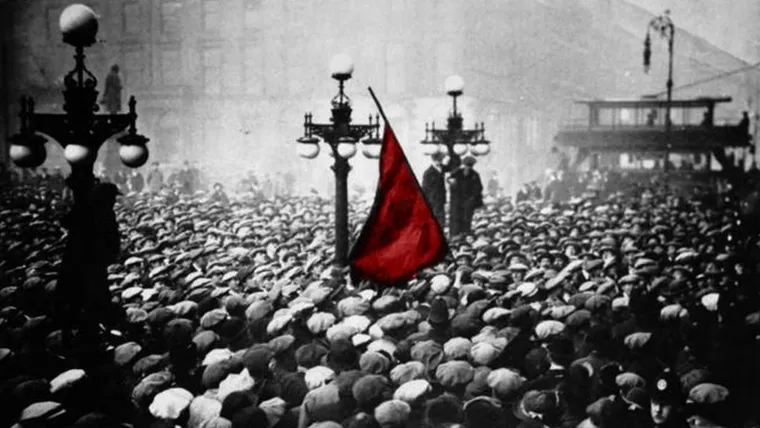
Fast forward to the twentieth century and Scotland was the setting for The Battle of George Square, otherwise known as Bloody Friday, which took place in Glasgow on 31st January 1919. The battle, probably the most violent political riot in the history of the city, was triggered in response to a savage and unprovoked police assault on the people who thronged George Square. A crowd of some 90,000 had gathered to show solidarity with the local trade unions’ call for a general strike in support of the demand for a forty hour week. In an area already dubbed Red Clydeside, the raising of the red flag was bound to alarm the Coalition Government amidst fears of a “Bolshevist uprising”. Just to be on the safe side, Home Secretary Winston Churchill sent in 10,000 troops armed with machine guns, six tanks and a 4.5 inch Howitzer; the largest peacetime deployment of British soldiers on native soil.
The era of Red Clydeside and its legacy will be forever associated with such old left-wing stalwarts as John MacLean, James Maxton, Mary Barbour and Willie Gallacher. Another name to conjure with is that of Hugh MacDiarmid—actually the nom de plume of poet Christopher Murray Grieve—who was a communist and a Scottish nationalist. In 1928, MacDiarmid, a member of The Communist Party of Great Britain (CPGB), helped found The National Party of Scotland (NPS), a forerunner of the extant Scottish National Party. The NPS was a left-of-centre outfit and his co-founders were committed to both socialism and Home Rule. Be that as it may, MacDiarmid would eventually hold the dubious distinction of being expelled from the NPS because of his communist ties and then expelled from the CPGB due to his nationalist orientation.
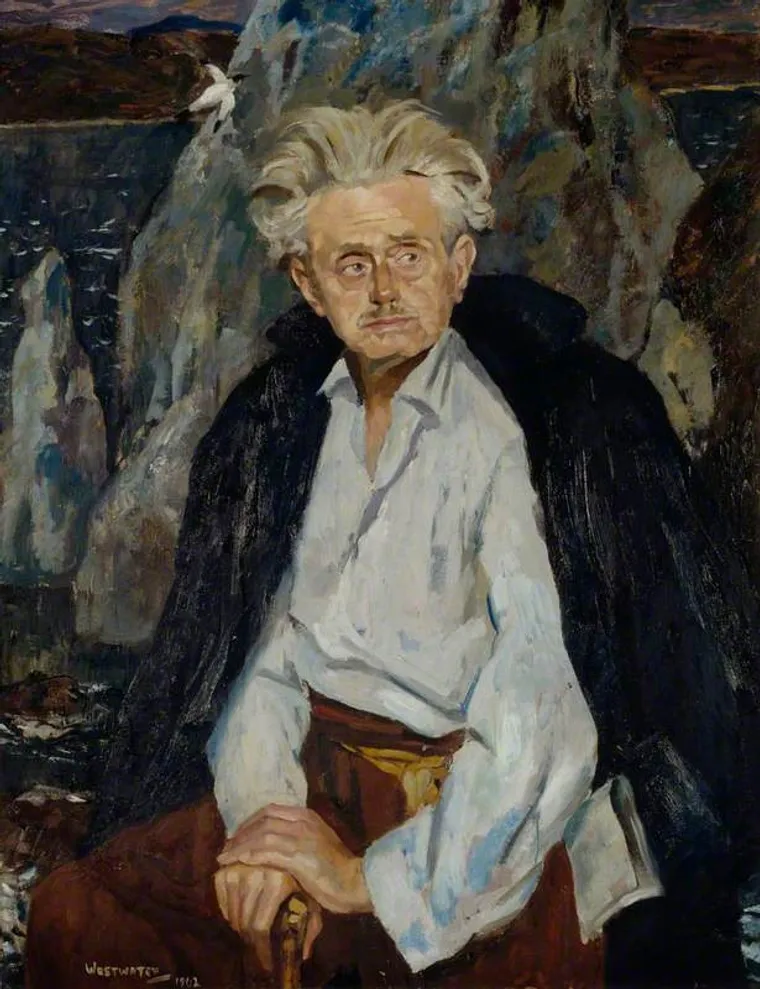
In Scotland, the basis of radical politics had long been an amalgam of socialism and nationalism. For instance, in addition to Hugh MacDiarmid, James Maxton, a member of the Independent Labour Party (ILP), was a proponent of Home Rule, while John Maclean, Chair of the Third All-Russian Congress of Soviets in January 1918, was a supporter of outright Scottish independence. Indeed, in 1920, Maclean refused to join the newly constituted CPGB, opting instead to set up the Scottish Workers Republican Party (SWRP) shortly before his death in 1923. The SWRP aimed for an independent Scotland in the shape of a communist republic. Of a piece with this goal, Maclean—an admirer of fellow Marxist James Connolly and the Irish Socialist Republican Party—reasoned that the break-up of the British state and empire would aid the cause of world socialism.
Maybe back then it was a premature, semi-idealist hope, but what now? Is it time to reacquaint young working class Scots with their true social history and inspire them once again?
As regards Scotland’s contemporary claim to independent nationhood there can be no doubt that history as well as a more recent international precedent—i.e. the 1993 dissolution of Czechoslovakia—is on its side. Significantly, when joining the blood-soaked corporation of corporations the Scots elite cannily retained both their country’s separate body of law (Lagh na h-Alba) and currency. With the reconstitution of the Scottish Parliament in 1999—created as a result of a 74.29% Yes vote in the 1997 Scottish devolution referendum—Scotland’s political system has all but returned to its pre-1707 arrangement. Therefore, leaving aside the remaining question of a standing army or defence force, Scotland once again possesses all the trappings of a sovereign power with future independence a distinct possibility.
Communists and a second referendum
On the subject of the proposed second Scottish independence referendum, which is currently being considered north of the border and discussed among sections of the British left, it is my opinion that communists should view the matter from a purely tactical standpoint. Objectively speaking, Scotland is not an colonised country and so the principle of national self-determination in a Leninist sense shouldn’t enter the equation. It must follow then that the only criterion worthy of revolutionary analysis is this: would a Scottish breakaway from today’s United Kingdom weaken British imperialism and further undermine the vitality of British capitalism?
Ruling class concerns about a potential breakup of the UK are fairly obvious. For instance, during the 2014 independence referendum the amount of pleading and cajolery on display, including former premier Gordon Brown’s desperate last-ditch intervention, was enough to raise the question: what are they so scared of? Post Brexit, could Scottish independence prove to be the proverbial straw that broke the camel’s back?
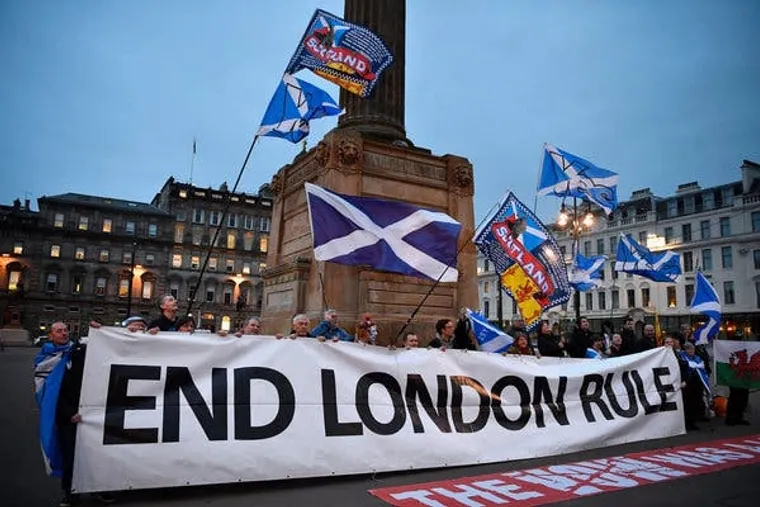
From my standpoint, every political and social conflict that destabilises the bourgeois state should be seized upon as an opportunity to weaken it. What ultimately fractures the UK will almost certainly be an accumulation of such contradictions: a convergence of pressures it proves unable to resolve. The so-called “break-up of Britain” is merely one possible fault line within that wider crisis.
Why Wales is in a different position
Wales, though, stands in a materially different position from Scotland. Absent a socialist transformation of the UK, it is difficult to see how Wales could achieve parity with England. The most plausible outcome under current conditions would be enhanced autonomy rather than full independence.
In terms of territory, population, and GDP, Wales ranks above several sovereign states in one or more categories (as would a hypothetical “Northumbria”); however, these formal metrics obscure the decisive question of power. It is improbable that an imperial England would willingly relinquish control over a strategically significant neighbour integrated for seven centuries. Beyond conventional security considerations, the growing importance of natural resources — particularly water — further entrenches that structural dependence under the present socio-economic order.
Whatever the eventual outcome of our deliberations may be, this seemingly thorny issue surely deserves serious consideration from a Marxist-Leninist perspective. A discussion, or series of discussions, must also examine the history of English imperialism, the role of the Westminster state in relation to the UK as a whole, and how all this impacts the present-day Irish Republic and the province of Northern Ireland.
Last but not least, we should take a close look at the role of the City of London. The economic and political hub of Norman hegemony still dominates Britain today, unreformed by Cromwell’s brief Protectorate and unchanged (indeed, fully adopted and developed) by the emerging post-republican bourgeoisie.
While London no longer commands all aspects of European finance as it did pre-2000s, the City remains a crucial global financial nexus, central to currency markets, capital flows, and financial services worldwide.
In relation to the rest of the United Kingdom, the City’s political system is a striking anomaly. Indeed, a rare 1951 documentary described it as a “state within a state.” As Clement Attlee, UK Prime Minister from 1945 to 1951, once knowingly remarked: “Over and over again we have seen that there is in this country another power than that which has its seat at Westminster.”
The City of London Corporation, often described as the world’s oldest continuously elected local authority, governs the Square Mile, the historic heart of London. Officially and legally known as The Mayor and Commonalty and Citizens of the City of London, the Corporation administers the City’s unique municipal functions and centuries-old traditions.
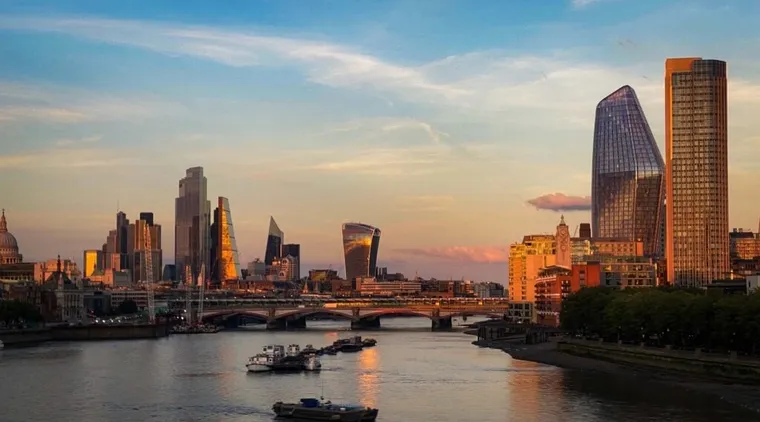
The City is home to around 8,000 residents but also hundreds of corporations that wield disproportionate influence in local elections. Residents across the 25 wards can vote, yet businesses continue to dominate the electoral landscape. Companies nominate individuals to cast their votes, with the number of votes roughly proportional to the size of the workforce. In practice, large employers, particularly in finance, carry far more sway than ordinary residents, while employees themselves rarely have a direct say.
Adding to the City’s clout is the Remembrancer, the Corporation’s Parliamentary Agent and ceremonial head of protocol. This centuries-old office, established during the reign of Elizabeth I, monitors legislation, briefs MPs and Lords, and represents the City’s interests in Westminster. Though the Remembrancer does not have legal powers to veto or amend bills, the office functions as a powerful conduit between the City and Parliament, giving the Corporation a level of insight and influence few other local authorities enjoy.
Then there is City’s Cash, a private fund built up over eight centuries. While parts of the Corporation’s work — such as its local authority and police functions — are covered by the Freedom of Information Act, the majority of City’s Cash remains beyond public scrutiny. The result is a blend of transparency and secrecy: the City operates under normal democratic rules for its public functions, but a significant portion of its finances is insulated from the kind of oversight expected of most public bodies.
For such a tiny population, the City’s residents live at the heart of a remarkably complex system where centuries-old privilege, corporate voting power, and private funds intersect — shaping governance in ways that often go unseen.
The City as a brake on reform
During the nineteenth century, when Britain experienced waves of democratic agitation, the City’s political influence pushed for incremental rather than revolutionary reform. Parliamentary reform acts expanded the franchise gradually, but the autonomy and privileges of the Corporation remained intact. In the twentieth century, especially during periods of Labour government committed to nationalisation or expanded welfare provision, the City’s position as a global financial hub limited the scope of economic transformation. Sterling crises, capital flight, and negotiations with international lenders underscored the constraints that financial integration imposed on radical policy. Even after the “Big Bang” deregulation of 1986, which transformed London into a pre-eminent global financial centre, successive governments—Conservative and Labour alike—treated the competitiveness of the City as a matter of national interest.
Institutionally and ideologically, then, the City has served as a permanent, substantial fortification against abrupt systemic change in two ways. First, its entrenched constitutional privileges symbolise continuity with the pre-modern order, reinforcing a political culture of gradualism. Second, its concentration of financial power creates practical economic limits on reform by tying the fiscal health of the state to investor confidence. While it has not prevented all reform—Britain has undergone profound social and political change—it has consistently channelled that change into evolutionary rather than revolutionary pathways. In this respect, the City of London and its Corporation have acted less as overt political antagonists to reform than as guardians of a financial-constitutional settlement that rewards stability, continuity, and incremental adjustment over rupture.
As the French would have it, “Plus ça change, plus c’est la même chose”—the more things change, the more they stay the same.
In relation to the prospects for proletarian revolution and an advance to socialism, this bulwark must be overcome. Paradoxically, it resembles an irresistible force meeting an immovable object. In reality, however, while something will undoubtedly give, the core of British capitalism is likely to prove a very tough nut to crack.